
Choosing the Right Cabinet Finish: A Practical Guide for Ontario Homeowners
Paint, stain, laminate, thermofoil, acrylic, or veneer? An honest comparison of every major cabinet finish, including how each one performs in Ontario kitchens, real CAD pricing, and how to pick without regrets.
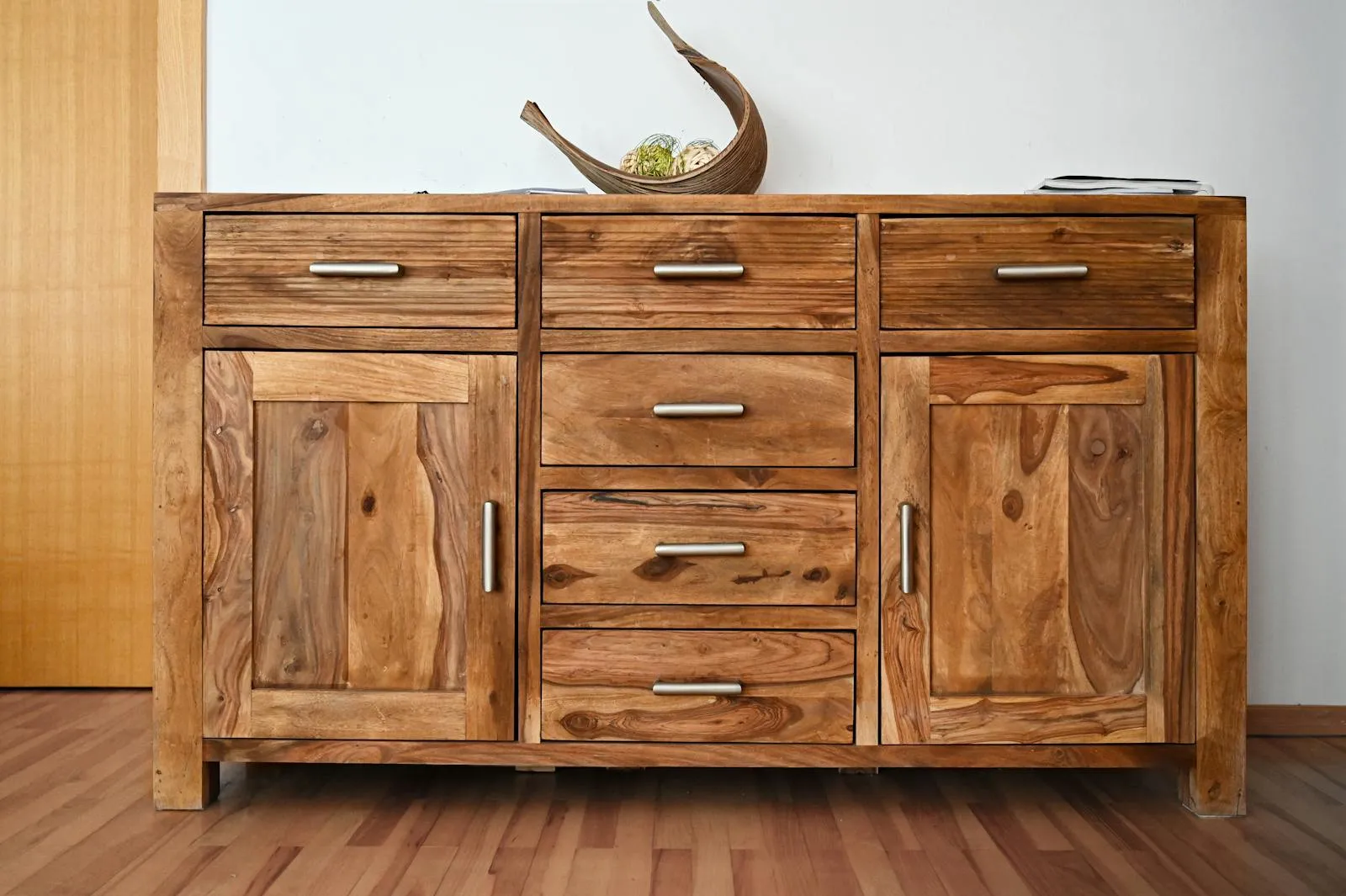
The finish is the part of your cabinets you actually touch every day. It is also the single design choice that does the most work visually, and the one most likely to disappoint if it is picked for the wrong reasons. Two cabinets with identical boxes, identical doors, and identical hardware can read as completely different kitchens once one is finished in painted MDF and the other in white oak veneer.
This guide walks through every major cabinet finish on the Ontario market in 2026, what each one actually costs, how each performs over years of real use, and a simple framework for choosing without regret.
What is a “cabinet finish,” exactly?
A cabinet finish is the visible surface treatment applied to the door, drawer front, and any visible cabinet panel. It can be a coating (paint, lacquer, stain), a thin sheet bonded to a substrate (laminate, melamine, thermofoil, acrylic), or a layer of real material (wood veneer, stone veneer). The finish determines colour, sheen, texture, and how the cabinet behaves around heat, moisture, scratches, and cleaning chemicals.
The substrate underneath the finish matters almost as much as the finish itself. A painted MDF door and a painted plywood door look identical on day one, but they age differently over a decade in an Ontario home. Most cabinet quotes describe finish and substrate together: “painted MDF shaker,” “stained maple slab,” “high-pressure laminate (HPL) on particleboard.”
The major cabinet finishes available in Ontario
There are six finish families that account for almost every kitchen cabinet sold in Ontario in 2026. Here is the side-by-side view, with the rest of the article digging into each.
| Finish | Substrate (typical) | 2026 cost (CAD/linear ft, doors only) | Look | Cleaning | Repair |
|---|---|---|---|---|---|
| Painted | MDF or solid wood | $110 to $320 | Classic to modern | Easy | Touch up at home |
| Stained wood | Solid wood, sometimes veneer | $180 to $400 | Warm, traditional, organic modern | Easy | Refinishable |
| High-pressure laminate (HPL) | Particleboard or MDF | $90 to $180 | Modern, broad palette | Very easy | Replace door |
| Melamine / thermally fused | Particleboard | $60 to $120 | Modern, budget | Very easy | Replace door |
| Thermofoil (vinyl wrap) | MDF | $40 to $100 | Mid-range modern | Very easy | Replace door |
| Acrylic / supermatte | MDF or particleboard core | $250 to $450 | High-end modern, European | Easy (matte better than gloss) | Replace door |
| Wood veneer | MDF or plywood core | $300 to $550 | Premium organic modern | Moderate | Specialty refinish |
Door cost is one piece of the kitchen budget. For full kitchen pricing context, see our 2026 Ontario kitchen cabinet cost guide.
Painted cabinets
Painted cabinets are the workhorse of Ontario kitchens. They have been the dominant finish in the GTA market for nearly two decades and remain the most-specified option in mid- and upper-tier projects in 2026. The reason is simple: paint is the most flexible finish on the market. Almost any colour, sheen, and texture is available, the look reads classic enough to age well, and touch-ups are realistic.
Three things drive painted cabinet quality:
The substrate. Painted MDF is the standard. It is dense, dimensionally stable, takes paint cleanly, and produces a glass-smooth finish on a flat surface. Painted solid wood (maple, poplar) telegraphs grain through the paint and develops fine cracks at the joints over time, which some buyers find charming and others find frustrating. Both are valid; just know which one you are getting.
The coating system. The best Ontario shops use catalyzed conversion-varnish or two-part polyurethane paint sprayed in a controlled booth. Big-box and entry-level cabinets use lower-cost lacquers or water-based coatings. The difference shows up in how the finish handles fingernails, kitchen splatter, and dishwasher steam over five to ten years.
The colour. Manufacturer standard colours (typically 10 to 30 options) are included. Custom-matched paint to a Benjamin Moore, Sherwin-Williams, or Farrow & Ball colour usually carries a 5 to 15 percent surcharge in Ontario, plus an extra week of lead time.
Painted shakers in white, off-white, soft greige, sage, navy, and forest green dominate the GTA market. For a comparison of shaker vs flat-panel painted doors, see our shaker vs slab door guide.
Stained wood cabinets
Stained wood is having a serious moment in Ontario in 2026. After roughly fifteen years of all-white kitchens, designers and homeowners have started specifying rift-cut white oak, walnut, and cerused finishes again, especially in custom and upper-tier semi-custom projects.
The look depends almost entirely on the species and the cut:
- White oak (rift or quartersawn) is the dominant choice for organic-modern and Scandinavian kitchens. Tight grain, warm honey tone, ages beautifully.
- Walnut reads as luxurious and rich. Premium price, premium look, slightly softer wood that scratches more easily.
- Maple takes stain unevenly and can blotch. Often used with toner or glaze rather than open-grain stain.
- Cherry darkens and reddens significantly over five to ten years. Beautiful for traditional kitchens, surprising for buyers who didn’t expect the colour shift.
- Hickory and birch are mid-priced, more traditional, less common in modern Ontario kitchens.
Stained wood is the finish most affected by Ontario’s humidity swings. Doors are typically built as five-piece shaker construction with a floating centre panel that allows seasonal expansion and contraction. In dry winters, a thin sliver of unstained wood occasionally shows where the panel has retreated into the frame. This is normal and expected. Veneered slab doors with stained finish are more dimensionally stable but less repairable.
Stained finishes can be refinished at the end of their life. A 25-year-old stained kitchen can be sanded and re-stained to look brand new, which painted MDF cabinets cannot.
Laminate, melamine, and thermofoil
These three finishes are often grouped together in the Ontario market, but they are distinct products with different durability and price points.
Melamine (thermally fused melamine, TFM, or low-pressure laminate) is a paper saturated with melamine resin, fused to particleboard at low pressure. It is the dominant interior finish for cabinet boxes and the lowest-cost door finish. Hard, scratch-resistant, available in dozens of woodgrain and solid colour patterns. The IKEA SEKTION default for white doors is essentially this product. Limited to flat slab construction.
High-pressure laminate (HPL) uses the same paper but compressed under much higher pressure with multiple layers, creating a thicker, harder, more impact-resistant face. HPL is the standard for commercial casework and mid-tier modern Canadian kitchens. The colour palette is broader than melamine, the durability is meaningfully better, and the price is moderately higher.
Thermofoil is a thin vinyl sheet vacuum-formed over a routed MDF core. It can wrap around shaker profiles, raised panels, and curves, which laminate cannot. The trade-off: thermofoil delaminates near heat sources. Ontario kitchens with thermofoil cabinets adjacent to ovens or above dishwashers regularly show peeling or bubbling within three to seven years. Modern thermofoils with thicker films and better adhesives perform better than the 1990s-era product, but the failure mode is still real.
For condo galleys, basement suites, rental units, and budget renovations where a flat slab door reads as intentional, HPL is the smartest finish in the laminate family. Thermofoil is acceptable when budget rules and cabinets are kept away from major heat. Pure melamine is best reserved for cabinet interiors and basement kitchens.
Acrylic and supermatte finishes
Acrylic is a thick, high-pigment plastic sheet bonded to an MDF or particleboard core, typically with a protective film that is peeled off at install. The look is a flawless, dead-flat colour with no visible substrate edge. Two variants dominate Ontario in 2026:
High-gloss acrylic produces a near-mirror reflection. Stunning under good lighting, ruthless with fingerprints, smudges, and water spots. Best in low-traffic kitchens or display areas.
Supermatte acrylic uses a textured coating that diffuses light, producing a soft, almost velvet appearance. Many supermatte products are anti-fingerprint, meaning oils from skin do not leave visible marks. Premium supermatte from Italian and German manufacturers sets the high-end of the European-look kitchen market.
Both are scratch-prone if you use abrasive cleaners or wipe with a dirty cloth. Both are essentially impossible to repair invisibly; damaged doors get replaced, not refinished. Both are at the top of the price ladder, comparable to or above stained wood and wood veneer.
Acrylic suits modern kitchens with handleless drawers, integrated appliances, and minimalist hardware. It looks out of place in a 1920s Toronto semi or a Victorian renovation. Match the finish to the architecture, not just the trend.
Wood veneer
Wood veneer is a thin slice of real wood (typically 0.6 to 1.0 mm) bonded to a stable substrate, finished on the visible face only. It produces the look of solid wood at lower cost and with better dimensional stability, particularly important in Ontario’s seasonal humidity swings.
The veneer can be cut in different ways, which produces dramatically different visual results:
- Rift cut delivers tight, parallel grain that reads as modern and intentional.
- Quartersawn produces tight grain plus occasional medullary rays, classic in mid-century furniture.
- Plain sliced (flat cut) shows cathedrals and figure, traditional in kitchens and millwork.
- Bookmatched veneers create mirror-image grain patterns across adjacent doors, a premium showroom look.
Premium European veneer slabs use a balancing veneer on the back face to prevent warping in low-humidity environments. Cheaper veneer doors skip this and can cup or lift at the edges in dry Ontario winters. This is not a hypothetical risk; it is the most common failure mode in budget veneer doors installed in older homes without humidity control.
A veneered slab kitchen, done well, is the most visually warm and architecturally serious option in the modern category. Done poorly, it looks and ages like cheap furniture. The substrate, the veneer thickness, and the manufacturer matter enormously. Ask specifically.
How each finish performs in Ontario kitchens
Cabinets in Ontario have to handle three things most other regions don’t combine:
- Dramatic humidity swings. 60 to 70 percent indoor humidity in August, 18 to 22 percent in February. Most failures in Ontario kitchens trace back to this single fact.
- Hard water and aggressive cleaners. Vinegar, ammonia, and citrus cleaners are common in Ontario households and brutal on certain finishes.
- Long, dark winters with high indoor cooking volume. More steam, more grease, more dishwasher cycles per year than southern climates.
Ranking the major finishes on real-world Ontario performance, from most to least forgiving:
- Painted MDF (catalyzed coating) — most forgiving, most repairable, most flexible.
- Stained solid wood (with floating panels) — handles humidity well, refinishable at end of life.
- High-pressure laminate — durable, easy to clean, replace-rather-than-repair.
- Acrylic supermatte — durable but unforgiving of damage; premium price for premium look.
- Wood veneer (premium European) — beautiful, but requires controlled humidity and a quality manufacturer.
- Thermofoil — fine away from heat, problematic adjacent to ovens and dishwashers.
- Melamine — fine for box interiors and budget projects, limited as a primary visible finish.
Cost comparison: same kitchen, six finishes
To anchor the numbers, here is a 22-linear-foot Ontario kitchen with identical layout, hardware, and box construction, priced six ways. Cabinets only, before installation and tax.
| Finish | Estimated 2026 cabinet cost (CAD) |
|---|---|
| Thermofoil shaker (MDF) | $9,500 |
| HPL slab (particleboard) | $11,000 |
| Painted MDF shaker (semi-custom) | $13,500 |
| Painted MDF shaker (custom shop) | $19,800 |
| Stained white oak veneer slab | $26,500 |
| Acrylic supermatte slab (European) | $29,000 |
The price gap between the cheapest and most expensive option is 3x. In most cases the choice between painted shaker, stained veneer, and acrylic comes down to architectural fit and cooking patterns, not budget.
Decision framework: how to pick the right finish
These five questions resolve the finish decision for most Ontario homeowners.
- What is the home’s architecture? Pre-war and traditional homes lean painted shaker or stained wood. Modern condos and contemporary builds lean HPL slab, acrylic, or veneer.
- How heavily do you cook? Heavy daily cooking with frying and high heat favours laminate, painted, and stained finishes over thermofoil and gloss acrylic.
- What is your humidity control? Homes with central HVAC and a humidifier handle every finish well. Homes without humidity control should avoid budget veneer and gloss acrylic.
- How long will you live there? Under five years and resale matters: painted shaker has the broadest buyer appeal in Ontario. Over fifteen years and you cook every day: pick the finish you will love touching, even at premium price.
- What is your repair tolerance? Painted finishes are touchable at home with a brush. Acrylic, veneer, thermofoil, and laminate are replace-only. If you have kids, dogs, or move furniture frequently, prioritize repairability.
Frequently asked questions
What is the most durable cabinet finish?
For day-to-day Ontario kitchen use, painted MDF with a catalyzed conversion varnish and high-pressure laminate slab are the two most durable finishes overall. Both resist fingerprints, water, and most household cleaners, and both age well over decades.
Are painted cabinets better than stained?
Neither is universally better. Painted cabinets are more flexible (any colour, any sheen) and more touch-up-friendly. Stained cabinets are more refinishable at end of life and read as warmer and more architecturally substantial. Architecture, cooking habits, and humidity control should drive the choice.
Do thermofoil cabinets really peel?
Thermofoil cabinets manufactured before about 2010 had a meaningful peeling problem near ovens and dishwashers. Modern thermofoil with improved adhesives performs better, but the failure mode still exists. In Ontario kitchens with high heat or steam, thermofoil should not be used immediately adjacent to ovens or dishwashers. Choose painted MDF or HPL for those locations.
What finish is best for a wet area like a bathroom vanity?
For Ontario bathroom vanities, painted MDF (with proper edge sealing) and HPL slab are the best choices. Both handle moisture well, clean easily, and tolerate the temperature swings typical of bathrooms. Solid wood veneer is fine in well-ventilated bathrooms but should be avoided in poorly ventilated ones.
How long does a painted cabinet finish last?
A well-applied painted finish on MDF, sprayed in a controlled booth and properly cured, typically lasts 15 to 25 years before needing refinishing in normal residential use. Cabinets near dishwashers, ovens, and high-traffic edges show wear first. The cabinet box itself usually outlives the finish by another 10 to 20 years.
Can you change cabinet finish without replacing the cabinets?
Yes, refinishing is realistic for solid wood and painted cabinets. Painted MDF can be sanded, primed, and repainted. Solid wood can be sanded and re-stained or repainted. Refinishing typically runs 25 to 40 percent of the cost of new doors, depending on quality. Laminate, thermofoil, acrylic, and veneer cannot be meaningfully refinished and require door replacement.
Bottom line
The right cabinet finish is not the trendiest one or the most expensive one. It is the one that matches the architecture of your home, your cooking habits, and the climate it has to live in. For most Ontario homeowners in 2026, painted MDF shaker remains the safest and most versatile choice, with stained white oak and acrylic supermatte as strong alternatives in the right context. Whichever you choose, the substrate, the coating quality, and the manufacturer matter at least as much as the colour on the showroom door.
Keep reading
All posts-
Shaker vs Slab Cabinet Doors: A Practical Guide for Ontario Kitchens
Shaker or slab cabinet doors? A homeowner-focused comparison of cost, durability, cleaning, resale value, and how each style performs in Ontario kitchens, with a clear decision framework.
-
How Much Do Kitchen Cabinets Cost in Ontario? A 2026 Pricing Guide
Real 2026 pricing for stock, semi-custom, and custom kitchen cabinets in Ontario. Includes per-linear-foot ranges in CAD, GTA labour rates, hidden costs, and how to budget without surprises.